
Help us empower poor widows in India

Help us empower poor widows in India

United Nations logo

RESEARCH

From its inception, The Loomba Foundation has understood that discrimination against widows cannot be ended by goodwill alone. Governments, international organisations and communities need hard facts and clear evidence to change laws, policies and deeply rooted customs. That is why research is at the heart of our work.

In 2001, UN Women described widowhood as “the sin of omission” – noting how widows were largely absent from data, policy debates and reports on poverty, health and human rights. The Loomba Foundation set out to change that.
Building the Global Evidence Base

Alongside its campaign for International Widows Day, the Foundation launched a sustained research programme to uncover the scale, forms and impacts of discrimination against widows worldwide.
  • 2008 International Attitudes Survey
    Working with Chatham House (Royal Institute for International Affairs) and WorldPublicOpinion.org, the Foundation commissioned one of the first international surveys on public attitudes to widowhood in 18 countries. The findings showed that perceived disadvantage for widows is widespread and global, not confined to any one culture or region.
  • Global Widows Study (2010)
    Assembled from disparate data sources and published as an addendum to Invisible Forgotten Sufferers, this study provided the first global overview of widow numbers, causes of widowhood, harmful customs, and the economic and social impacts of discrimination. It helped inform the UN General Assembly’s decision in 2010 to adopt International Widows Day.
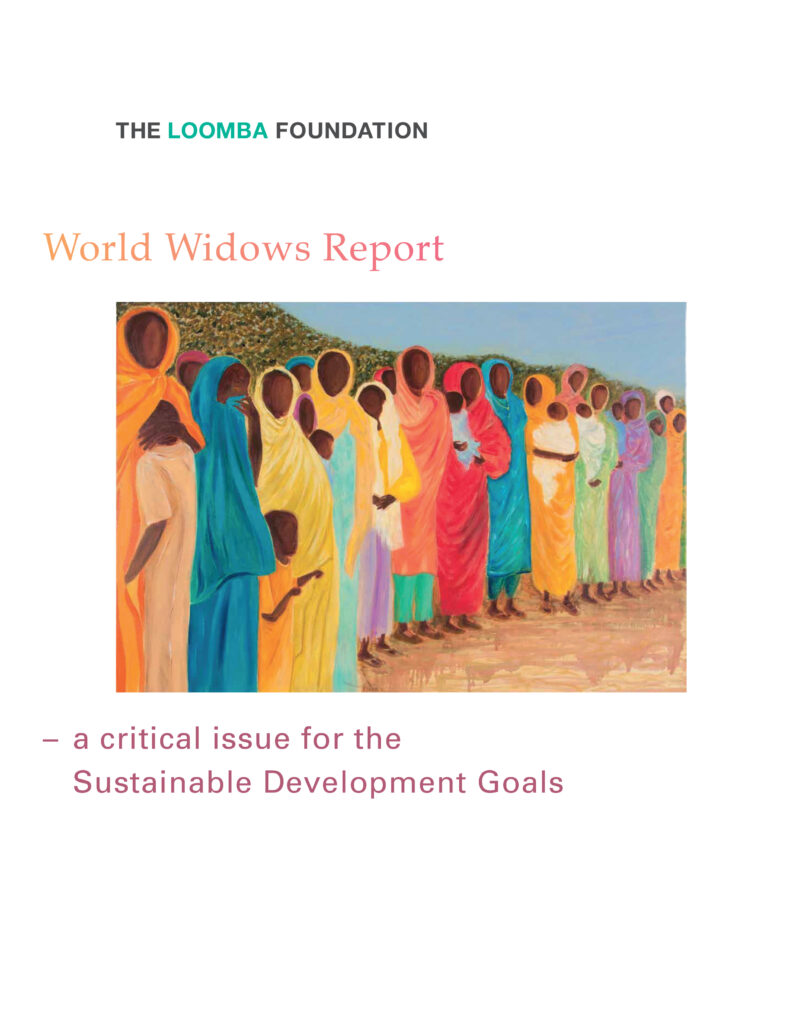
  • World Widows Report (2016)
    The first comprehensive, country-by-country and global data compilation on widowhood, the Report estimates 258 million widows with 585 million children, including 38 million widows living in extreme poverty. It documents the links between widowhood and child labour, trafficking, gender-based violence, ill health and blocked economic development.
    Launched at the UN Commission on the Status of Women, it now sits in the libraries of both Houses of the UK Parliament and is widely used by policymakers, NGOs and researchers as a baseline for action.

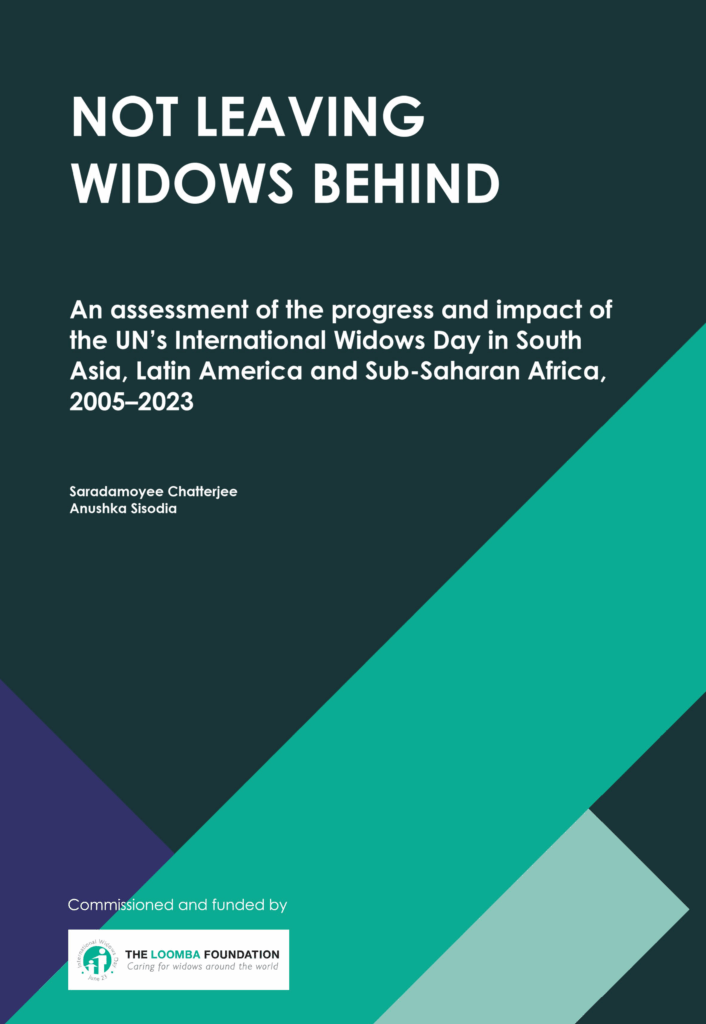
Not Leaving Widows Behind (2024)

In 2024, the Foundation commissioned University of Cambridge researchers to examine progress since International Widows Day was established. Covering 11 countries across South Asia, Sub-Saharan Africa and Latin America, Not Leaving Widows Behind finds that:

  • Awareness has grown, but cultural prejudice, dispossession, marginalisation and exploitation remain pervasive.
  • Lack of data on widows continues to undermine effective policy responses.
  • Ending discrimination requires a methodical, evidence-based approach to law, policy and programme design.

The report calls for a major scaling-up of research on widowhood and highlights how failure to address widows’ rights entrenches poverty and gender inequality and hinders achievement of the Sustainable Development Goals.

A Continuing Commitment

The Loomba Foundation is working with leading academic institutions and international partners to:

  • deepen the evidence on widowhood and its impacts
  • close data gaps at national and global levels
  • ensure that laws, social protection systems and development programmes are informed by robust research.

As Lord Loomba has said, “Eradicating the scourge of discrimination requires detailed knowledge of what is happening.” Through its research and advocacy, The Loomba Foundation is committed to providing that knowledge — so that widows are no longer invisible, and policies can be designed to secure their rights, dignity and economic independence.