
Help us empower poor widows in India
Help us empower poor widows in India
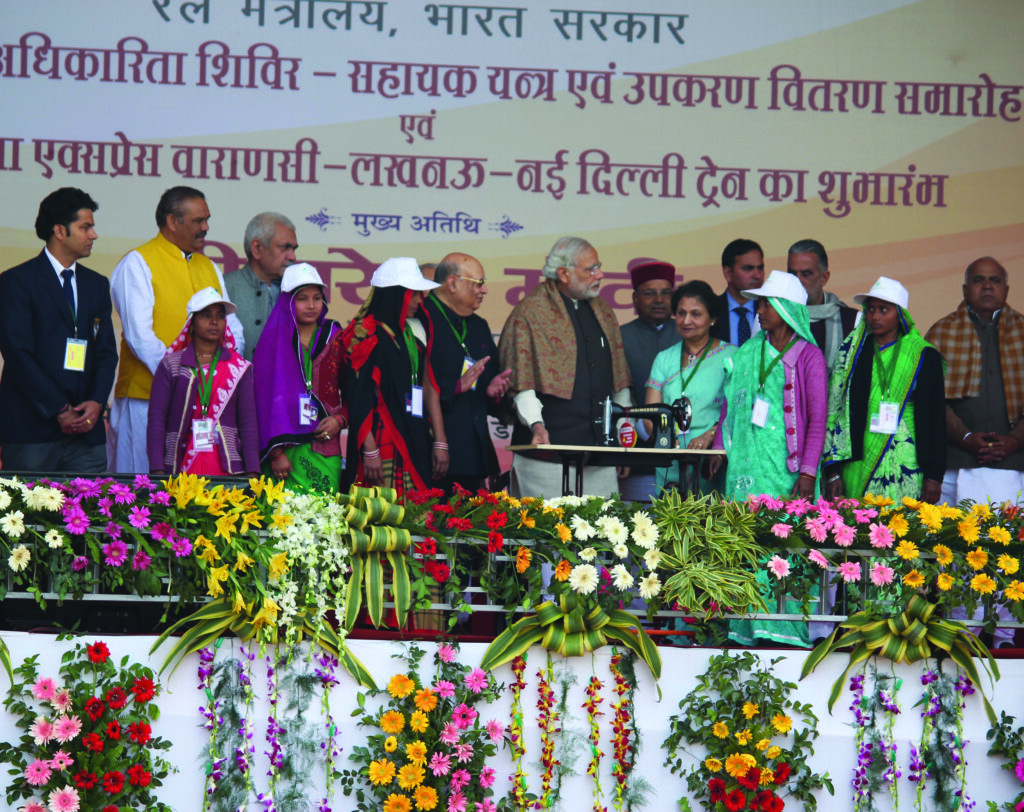
Prime Minister Narendra Modi of India launches The Loomba Foundation’s empowerment scheme for widows in Varanasi in 2016
WIDOWS EMPOWERMENT
For details of current programmes please click here
Empowering widows to rebuild their lives with dignity and independence is a central pillar of The Loomba Foundation’s mission. Across many countries, widows face deep-rooted discrimination, limited employment opportunities and acute economic vulnerability. Without viable livelihoods, many are pushed into exploitation, child labour or unsafe work. Our empowerment programmes exist to break this cycle—by providing widows with the skills, tools and support they need to thrive.
Building Skills, Confidence and Sustainable Livelihoods
The Foundation launched its first empowerment initiatives in the mid-2000s, investing in skills training, microfinance, and equipment to help widows start small businesses and gain financial independence. Over time, these programmes have expanded across Asia, Africa and Latin America, always grounded in one principle: helping widows help themselves.
Early partnerships with Youth Business International (YBI) and Virgin Unite supported widows in Sri Lanka, Bangladesh, Nepal, Syria, Kenya, Uganda, Chile and Guatemala. In Nairobi alone, the Loomba Entrepreneur Programme reached more than 5,000 widows and orphans, providing business training, mentoring and start-up loans for women launching new enterprises.
In Sri Lanka, partnerships with local women’s organisations enabled widows to enter trades such as jewellery making, garment production and small-scale manufacturing. In Rwanda, working with Oxfam, the Foundation delivered training and start-up support to 350 genocide survivors, helping rebuild communities devastated by conflict.
Large-Scale Empowerment Across India
From 2012 onward, the Foundation launched some of its most ambitious programmes in India. The Sewing Machine and Skills Initiative trained thousands of widows in garment-making and equipped each with a sewing machine—an intervention shown to benefit more than 100,000 dependents by enabling stable home-based income.
Further programmes followed across Delhi NCR, Bihar, Telangana, Puducherry, Mumbai and Punjab, including projects supporting widows in prisons and widows in Varanasi, where 5,000 women were trained and equipped through a programme launched by India’s Prime Minister Narendra Modi.
In 2017, a groundbreaking partnership with the Rotary India Literacy Mission delivered training and start-up support for 4,300 widows across five states, expanding into sectors such as beauty and wellness, hospitality, handicrafts, healthcare, textiles, agriculture and automotive services.
Transforming Lives in Challenging Contexts
Widows often face multiple layers of vulnerability—from conflict to displacement to incarceration. The Foundation has responded with tailored empowerment schemes, including support for widows and women prisoners across Haryana’s district jails and dedicated programmes in the cities of Vrindavan and Amethi—places where widows have long struggled with isolation and social stigma.
A New Chapter: Empowering 100,000 Widows by 2030
In January 2025, The Loomba Foundation, in partnership with the CII Foundation and supported by the Widows Collective Forum, launched its most ambitious initiative yet: to empower 100,000 widows and dependent youths in rural India by 2030.
This nationwide programme—guided by the principle “Leave No Widow Behind”—will equip widows with market-relevant skills, industry-linked training, mentoring and access to employment and enterprise opportunities.
Pathways to Independence
Across all programmes, the Foundation focuses on practical, transformative outcomes, enabling widows to:
Changing Lives, Strengthening Communities
Widows who gain skills and support do more than improve their own circumstances—they transform the futures of their children and strengthen their communities. The Loomba Foundation’s empowerment programmes have already helped tens of thousands of women build independent lives. With new partnerships and a bold expansion to 2030, we remain committed to empowering many thousands more.